Dec. 19, 2025
In modern metalworking and manufacturing, precision, efficiency, and reliability are paramount. Heavy duty lathe machines have become indispensable tools for industries that demand high performance in turning, drilling, boring, and threading operations. Among these, the 10T Heavy Duty Large Size Lathe Machine and the 20T Conventional Heavy Duty Horizontal Lathe stand out for their robust construction, versatility, and exceptional cutting capabilities. In this article, we will explore their features, benefits, applications, and how they can elevate productivity in industrial operations.
Heavy duty lathes are designed to handle large and heavy workpieces with precision and efficiency. Unlike standard lathes, these machines can perform heavy cutting on various ferrous and non-ferrous metals using carbon alloy tools. They are ideal for machining parts that require high rigidity, spindle speed, and power.
Capable of turning end faces, cylindrical surfaces, and internal holes.
Supports metric, inch, module, and pitch threads.
Top slides operate individually by power for cutting short taper surfaces.
Allows automatic turning through compound movement combining longitudinal and top slide feeds.
Can be used for drilling, boring, and trepanning.
High rigidity and powerful spindle speed ensure precision and efficiency.
Suitable for heavy cutting of various ferrous and non-ferrous metal parts.
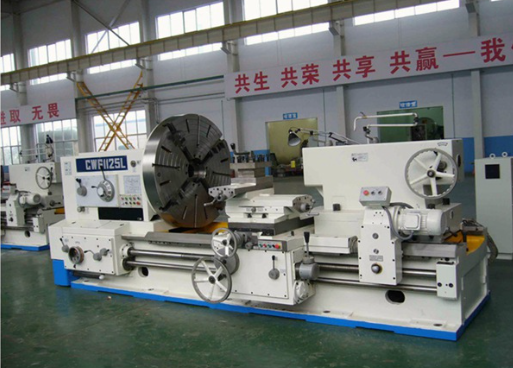
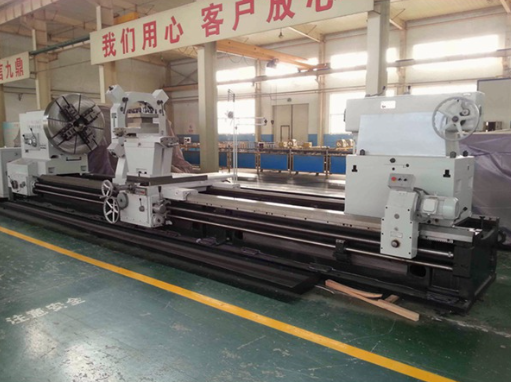
Guideway width of 1100mm, capable of supporting maximum loading between centers up to 10T.
Performs turning on end faces, cylindrical surfaces, and internal holes.
Supports metric, inch, module, and pitch threads.
Top slides powered individually for short taper cutting and automatic compound turning.
Functions include drilling, boring, and trepanning.
Offers high power, spindle speed, and rigidity.
Ideal for heavy cutting of various ferrous and non-ferrous metals.
| Feature | 10T Heavy Duty Lathe | 20T Conventional Heavy Duty Lathe |
|---|---|---|
| Maximum Load | 10T | 10T between centers |
| Guideway Width | Standard | 1100mm |
| Turning Operations | End faces, cylindrical, internal holes | End faces, cylindrical, internal holes |
| Thread Types | Metric, inch, module, pitch | Metric, inch, module, pitch |
| Top Slide Operation | Individually powered, compound automatic | Individually powered, compound automatic |
| Additional Functions | Drilling, boring, trepanning | Drilling, boring, trepanning |
| Material Capability | Ferrous and non-ferrous metals | Ferrous and non-ferrous metals |
| Cutting Tools | Carbon alloy tools | Carbon alloy tools |
| Rigidity & Spindle Speed | High | High |
High Precision and Accuracy
Heavy duty lathes ensure precise turning, threading, and drilling. The combination of powerful spindle motors and rigid construction minimizes vibration, resulting in smoother and more accurate finishes.
Versatility
Both the 10T and 20T lathes offer a wide range of operations, from basic turning to advanced drilling and boring. Their capability to handle metric, inch, module, and pitch threads makes them versatile for various industrial applications.
Efficiency and Productivity
With automated compound movements and individually powered top slides, these lathes reduce manual intervention and accelerate production. Operators can achieve more in less time while maintaining consistent quality.
Heavy Cutting Capability
Equipped with carbon alloy tools, these machines can perform heavy cutting on ferrous and non-ferrous metals. This makes them suitable for large-scale industrial projects requiring robust machining.
Durability and Longevity
The construction of heavy duty lathe machines ensures long-term reliability. High rigidity, robust materials, and precision engineering extend the service life, making them a valuable investment for manufacturing operations.
Heavy duty lathes are widely used across industries where precision and strength are critical. Key applications include:
Automotive Manufacturing: Machining engine components, shafts, and structural parts.
Aerospace Engineering: Producing high-tolerance components for aircraft engines and frames.
Metal Fabrication: Heavy cutting of steel, aluminum, and other metal parts for industrial use.
Oil and Gas Industry: Manufacturing drilling equipment, pipelines, and flanges.
Machinery Production: Creating large mechanical parts for industrial machines and tools.
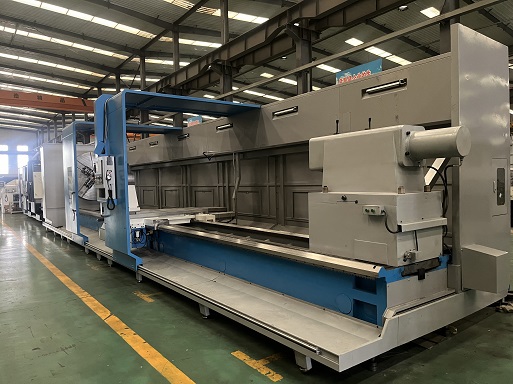
Investing in high-quality heavy duty lathes translates to enhanced precision, faster production, and reduced downtime. Their ability to handle large and complex parts efficiently makes them indispensable for industries that cannot compromise on quality or productivity.
To maximize performance and lifespan of your lathe machine:
Regularly lubricate moving parts.
Inspect spindle and guideways for wear.
Clean the machine thoroughly after each use.
Replace worn cutting tools promptly.
Conduct periodic calibration for accuracy.
Selecting between a 10T or 20T lathe depends on your production needs. For large-scale operations requiring maximum load handling and wider guideways, the 20T Conventional Heavy Duty Lathe is ideal. The 10T Heavy Duty Large Size Lathe suits operations that prioritize versatility and high-speed cutting for medium-to-large workpieces.
The heavy duty lathe machine is turning the Internal thread on the client customized machine,here we send machine working video for you,please kindly refer.
A heavy-duty lathe machine has achieved groundbreaking progress in the field of precision machining, successfully completing the internal thread machining task for a customer's customized machine. This accomplishment not only demonstrates the advanced craftsmanship of high-end equipment manufacturing but also showcases the company's rapid delivery capability in responding to personalized demands.
According to the on-site technical team, this heavy-duty lathe is specifically designed for machining complex components, featuring high torque, high rigidity, and an intelligent control system. In this task, the equipment precisely completed the internal thread machining of the core components of a customized machine using multi-axis linkage technology, achieving micron-level precision. During the machining process, the system monitored cutting parameters in real time to ensure the geometric accuracy and surface finish of the threads met stringent industrial requirements.
To visually present technical details, the company also provided customers with a video of the equipment in operation. In the video, the lathe spindle drives the cutting tool at a stable speed, with metal chips being discharged in an orderly spiral pattern, demonstrating a smooth and efficient machining process. Technical personnel noted that such customized processing requires a comprehensive consideration of material properties, toolpath optimization, and thermal deformation control. The video fully illustrates the entire workflow from clamping to the finished product.
"Internal thread machining is a critical process in mechanical manufacturing, particularly for heavy-duty equipment, as its quality directly impacts overall machine performance," said the company's R&D director. "This task has verified the reliability of our equipment under complex working conditions and also accumulated valuable experience for future high-end custom projects."
Heavy duty lathe machines are the backbone of modern manufacturing, delivering precision, power, and efficiency in one robust package. Whether you choose the 10T Heavy Duty Large Size Lathe or the 20T Conventional Heavy Duty Horizontal Lathe, both machines from Haven offer exceptional capabilities to meet diverse industrial needs. Investing in these machines ensures higher productivity, better quality, and long-term reliability for any workshop or production facility.
1. What is a heavy duty lathe machine?
A heavy duty lathe machine is a robust and versatile tool used for turning, drilling, boring, and threading large or heavy workpieces. It is designed for high rigidity, power, and precision in metalworking operations.
2. Can heavy duty lathes handle non-ferrous metals?
Yes, both 10T and 20T heavy duty lathes are capable of machining various ferrous and non-ferrous metals using carbon alloy cutting tools.
3. What are the main differences between a 10T and 20T lathe?
The 20T lathe offers a wider guideway (1100mm) and is suitable for larger-scale operations, while the 10T lathe provides high-speed cutting and versatile operations for medium-to-large workpieces.
4. Are these lathes suitable for industrial production?
Absolutely. Heavy duty lathes are designed for high-volume, precise industrial production across automotive, aerospace, metal fabrication, and oil & gas industries.
5. How can I maintain a heavy duty lathe machine?
Regular lubrication, inspection of spindle and guideways, cleaning after use, replacing worn tools, and periodic calibration are essential to maintain performance and longevity.

Haven - Equipment
Newsletter Subscription
We look forward to hearing from you

Navigation
Categories
Get in Touch
Service Hotline
+86 029-82697808 +86-18681851123
+86 15109273451
Address
Ruisen-Yunfeng Building, No.29 Nanerhuan East Road, Xi'An 710054 Shaanxi Province, China.